


Human pose estimation is increasingly used in AI fitness systems, smart fitness mirrors, sports analysis, industrial behavior monitoring, and other intelligent devices.
However, deploying a pose estimation algorithm in a commercial embedded device is not simply a matter of running an AI model. Pose estimation can require significant computing resources, especially when real-time camera input and continuous inference are involved. For many applications, cloud-based inference has traditionally been used to provide the required computing power. But sending video streams to the cloud can introduce latency, increase network and data costs, and create additional concerns around video data privacy. For commercial edge AI applications, the key challenge is therefore how to efficiently deploy human pose estimation on edge devices.
This article explains how AI hardware, NPU acceleration, model optimization, and local inference can help bring pose estimation algorithms from development to commercial deployment.
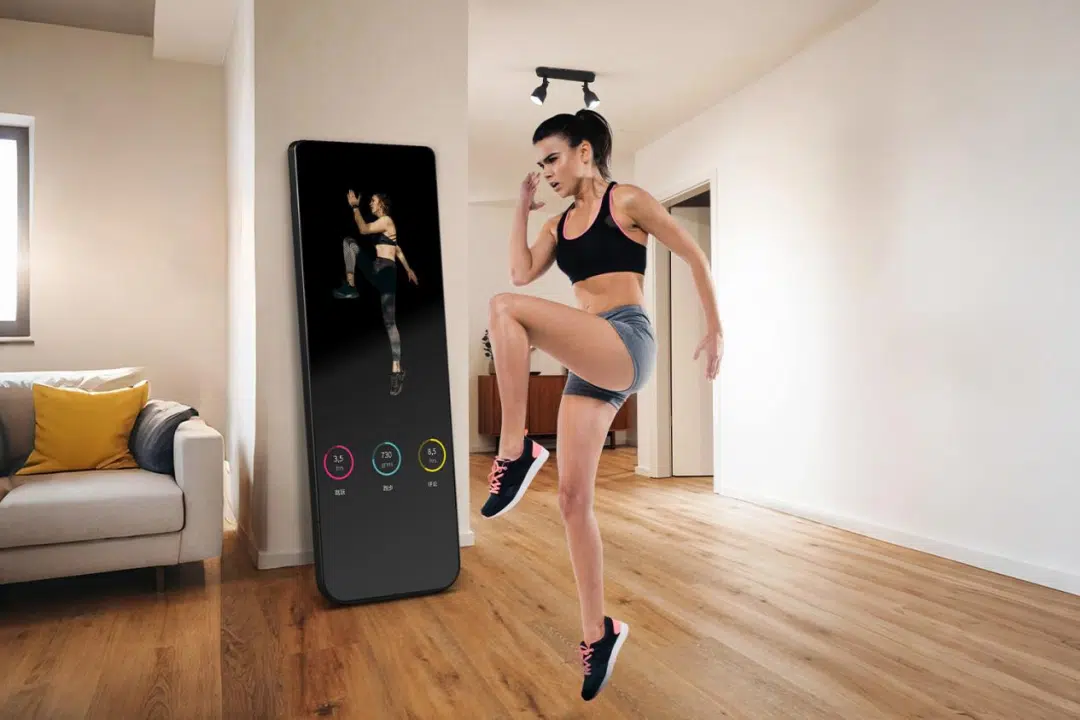
Pose estimation is an AI computer vision technology that identifies key points of the human body from images or video.
Depending on the application, pose estimation can be used to analyze human movement and generate structured results such as body key points and pose judgments.
Common application scenarios include:
For these applications, the ability to process camera data locally can be important for achieving responsive interaction and reducing dependence on cloud processing.
Cloud inference provides access to powerful computing resources, but it also requires video data to be transmitted to remote servers.
For embedded commercial devices, edge AI inference provides another deployment approach: the AI model runs directly on the device.
A typical edge AI architecture can process the camera stream locally and output structured information such as human key points and pose recognition results.
This approach can help address several practical challenges.
When AI inference is performed locally, the device does not need to continuously upload video data to a remote server and wait for the result.
This is particularly useful for interactive applications where the system needs to respond to human movement in real time.
Pose estimation applications often process camera images or video containing people.
With local inference, the original video stream can remain on the device while the system outputs structured AI results.
This can help reduce the need to transmit complete video streams to the cloud and supports applications with higher data privacy requirements.
Running pose estimation locally can reduce dependence on continuous cloud connectivity and avoid sending every video frame to a remote inference platform.
For large-scale commercial deployments, choosing suitable edge AI hardware can therefore be an important part of the overall system architecture.
Although edge AI provides clear advantages, embedded hardware has limited computing resources compared with cloud servers.
A pose estimation model needs to process camera input and perform AI inference continuously. If the hardware platform is not properly matched to the model, developers may encounter problems such as insufficient inference performance or difficulties during deployment.
This is why commercial pose estimation projects need to consider both the AI algorithm and the hardware platform.
The hardware needs to provide suitable AI computing capabilities while also supporting the operating system, camera input, software environment, and application requirements of the final product.
ShiMeta’s RK3576 and RK3588 series AI terminal motherboards provide up to 6 TOPS NPU computing power, making them suitable for local AI inference applications such as pose estimation.
By using the NPU for AI model inference, pose estimation workloads can be moved from the general-purpose CPU to dedicated AI computing hardware.
This creates an edge AI architecture in which:
Camera Input → AI Model Inference → Human Key Points → Pose Analysis → Application Response
Instead of relying entirely on cloud processing, the AI model can run locally on the embedded hardware.
This approach is particularly relevant to products such as AI fitness equipment, smart fitness mirrors, and industrial behavior monitoring systems.
Commercial deployment normally involves more than simply copying an existing AI model onto an embedded board.
Model optimization and hardware adaptation are important parts of the deployment process.
The first step is to prepare the pose estimation model according to the target application.
The model needs to be evaluated against the computing resources and deployment environment of the target edge device.
For embedded AI hardware, model optimization can help reduce computational requirements and improve deployment efficiency.
ShiMeta provides an SDK development environment that supports model lightweight deployment and assists developers with model quantization and operator adaptation.
The goal is to adapt the pose estimation model to the target hardware so that inference can be performed locally.
Different AI hardware platforms may have specific requirements for supported operators and model formats.
During deployment, operators need to be adapted to the target AI computing platform where necessary.
This hardware-software adaptation is an important step when moving a pose estimation algorithm from a development environment to an embedded commercial product.
After model optimization and operator adaptation, the pose estimation inference process can be transferred to the local AI hardware.
The device can then process camera input locally and output structured results such as:
This reduces the need to send the entire video stream to a cloud inference platform.
For commercial products, AI computing performance is only one part of the hardware selection process.
Developers also need to consider operating system compatibility, software development, product customization, and hardware integration.
ShiMeta AI terminal motherboards support Android and OpenHarmony and provide support for secondary development.
This makes them suitable as embedded computing platforms for different types of intelligent terminals.
Potential applications include:
Pose estimation can be used to analyze exercise movements and provide intelligent interaction in fitness equipment.
A smart fitness mirror can use camera-based pose estimation to recognize body movements and support interactive fitness applications.
Edge AI hardware can provide a local computing platform for applications that need to analyze human movement.
Pose estimation can also be applied to industrial environments for monitoring specific human actions or behaviors.
A successful AI product is not determined by the algorithm alone.
A high-performance model still needs suitable hardware, optimized deployment, and stable software integration before it can become a commercial embedded product.
For pose estimation applications, developers need to consider:
Choosing the right AI board for pose estimation at the beginning of a project can reduce the difficulty of later algorithm migration and hardware integration.
For developers and solution providers, the goal is usually not only to demonstrate that a pose estimation algorithm works.
The bigger challenge is turning the algorithm into a stable product that can be deployed across multiple devices.
ShiMeta provides AI terminal motherboard platforms together with an SDK development environment and FAE technical support.
Developers can use the hardware platform for prototype development, algorithm migration, debugging, and secondary development.
This can help shorten the path from an initial AI algorithm demonstration to an embedded commercial product.
The future of pose estimation is not limited to cloud-based AI inference.
As AI computing moves closer to the device, embedded NPU AI boards and edge AI hardware can provide a practical foundation for running computer vision algorithms locally.
For applications such as AI fitness, smart mirrors, sports analysis, and industrial monitoring, local pose estimation can provide a combination of:
The right combination of pose estimation algorithm + optimized AI model + NPU edge hardware can make it easier to move an AI vision concept from development into commercial deployment.
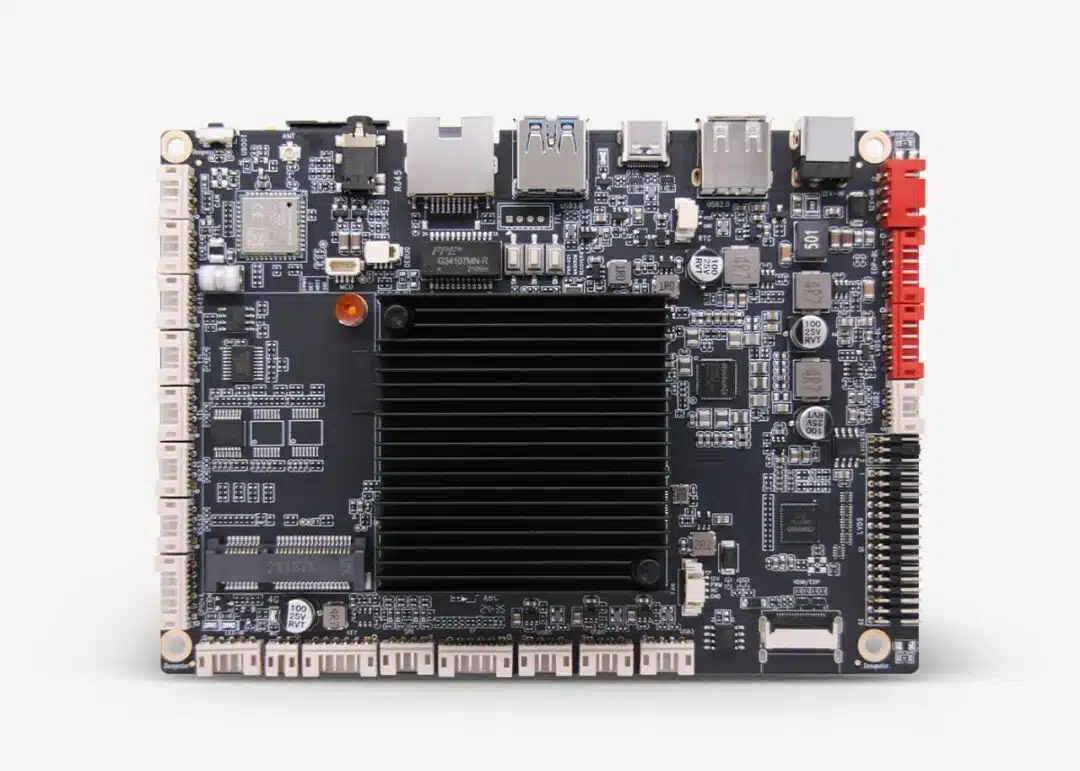
Looking for an AI board for pose estimation, AI fitness equipment, smart fitness mirrors, or other embedded computer vision applications?
ShiMeta’s RK3576 and RK3588 AI terminal motherboard platforms provide up to 6 TOPS NPU computing power and support Android and OpenHarmony. Combined with SDK development support, model optimization, and FAE technical assistance, they provide an embedded hardware foundation for edge AI applications.
Talk to ShiMeta about your next edge AI project and explore an AI hardware platform for your pose estimation application.


