


As international travel, digital identity verification, and self-service services continue to expand, passport control facilities, hotels, immigration service centers, and other public-facing environments need faster and more reliable identity verification solutions.
Traditional manual verification can involve repetitive steps, longer waiting times, and significant staff involvement. Self-service passport recognition terminals integrate passport reading, document scanning, image processing, and printing into a single device, helping automate routine identity verification workflows.
At the heart of these systems is an embedded computing platform capable of processing data efficiently, connecting multiple peripherals, and operating reliably in demanding environments.
The ShiMeta IoT-3399E RK3399 embedded board provides a computing platform for self-service passport recognition and scanning terminals, combining six-core processing, versatile display outputs, extensive peripheral connectivity, and flexible operating system support.
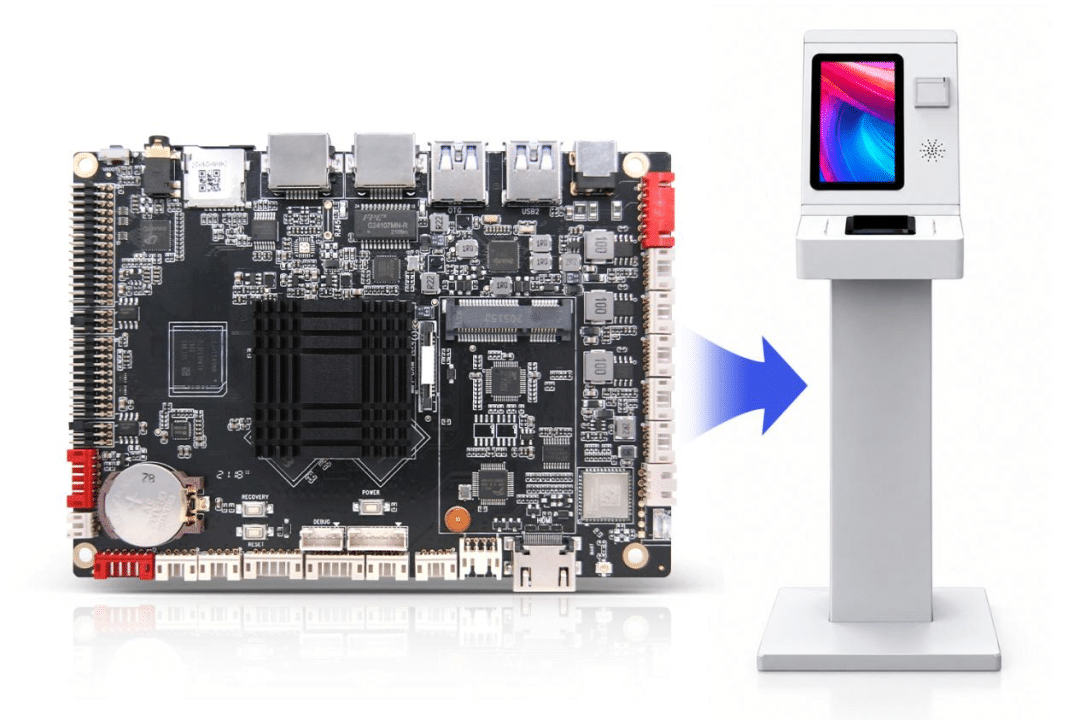
A self-service passport recognition terminal typically combines several hardware components, including:
Integrating these components into one terminal requires more than processing power. The embedded board must provide suitable interfaces, support the selected software environment, and maintain stable operation over extended periods.
For this project, the IoT-3399E serves as the central computing platform, connecting the terminal’s peripherals and running the software required for the intended workflow.
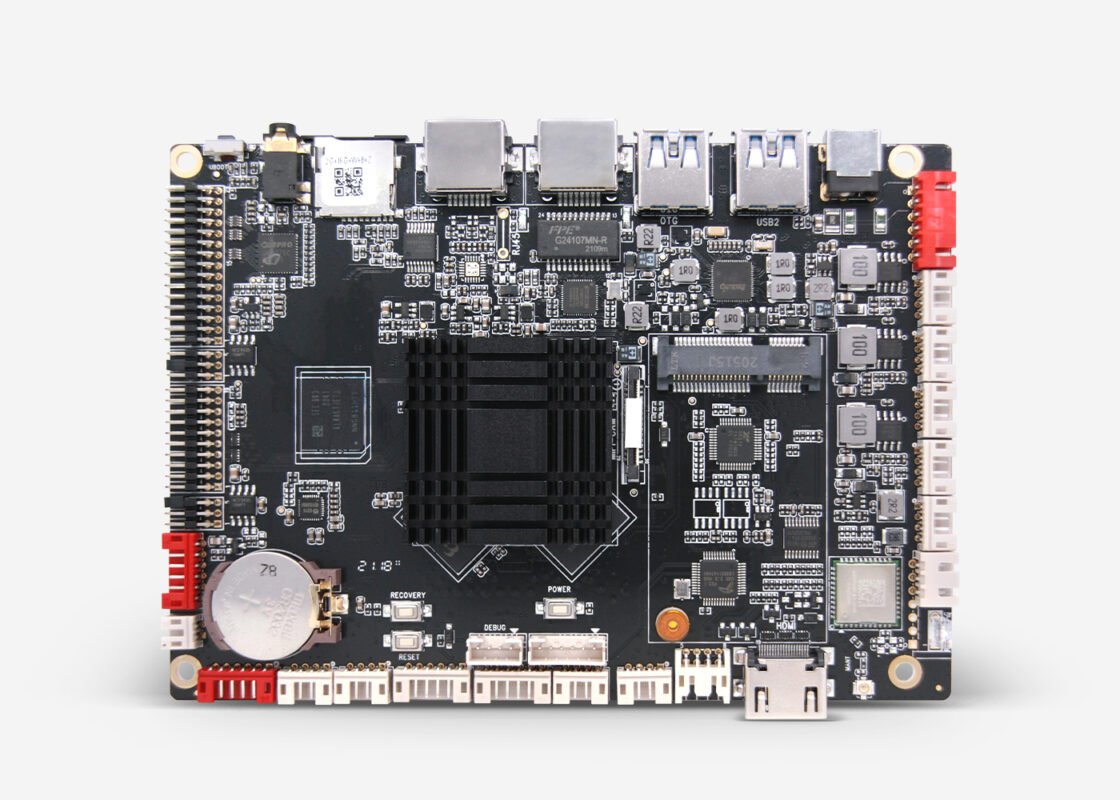
The IoT-3399E is powered by the Rockchip RK3399 64-bit processor, featuring a dual-core Cortex-A72 and quad-core Cortex-A53 architecture, with a maximum clock speed of 1.8 GHz.
This heterogeneous processing architecture supports a range of embedded computing workloads, including user interface rendering, document data processing, and application-level image analysis.
For passport recognition terminals, the board can serve as the computing foundation for software that coordinates document reading, OCR processing, camera input, and identity verification workflows.
Key benefits:
Actual recognition speed and accuracy depend on the selected algorithms, peripheral devices, software optimization, and system configuration.
The IoT-3399E integrates a Mali-T864 GPU and supports 4K video decoding and display output.
Its display interfaces include HDMI 2.0a, LVDS, and eDP, allowing system designers to select an appropriate display connection based on the terminal’s screen specifications.
Depending on the implementation and display configuration, these interfaces can support user-facing touchscreens, information displays, or additional screens for different parts of the service workflow.
Key benefits:
Display resolution and multi-screen functionality should be confirmed against the final board configuration and project requirements.
Self-service terminals often need to connect several devices through different communication interfaces. The IoT-3399E provides a broad range of I/O options to simplify hardware integration.
USB connectivity
The board provides two USB 3.0 ports and five USB 2.0 ports, enabling designers to connect supported USB peripherals such as document scanners, cameras, and other input devices.
Serial and control interfaces
The IoT-3399E includes three RS232 ports, one RS485 port, one TTL interface, I²C, and multiple GPIO interfaces. These options can help integrate compatible serial peripherals and project-specific control hardware.
Network connectivity
The board supports 10/100/1000 Mbps Ethernet, built-in Wi-Fi, and an optional PCIe 4G module. Network options can be selected according to deployment conditions and the terminal’s connectivity requirements.
With these interfaces, developers can design a customized hardware platform for passport readers, scanners, printers, cameras, and other supported peripherals, subject to interface and driver compatibility.
Self-service terminals may be installed in hotels, public service facilities, transportation environments, and other locations where long operating hours are required.
The IoT-3399E uses a 4-mil gold-finished PCB process, and its core-board gold fingers are designed for corrosion resistance. The board is secured using four mounting studs. According to the product information, each board undergoes a 16-hour testing process.
These design and testing measures support its use in embedded equipment that requires dependable hardware integration.
For a complete 24/7 deployment, the overall system should also be evaluated for thermal management, power stability, peripheral reliability, software recovery, and the environmental conditions of the installation site.
The IoT-3399E supports Android 7.1 and Android 11.0, with Linux and OpenHarmony support available subject to the project configuration.
This flexibility gives developers options when building kiosk applications, device-control software, and customized user interfaces.
ShiMeta’s API resources can also help developers integrate board-level functionality into their applications. Before starting development, confirm the required operating system version, drivers, API availability, and compatibility with the selected passport reader, scanner, camera, and printer.
In a self-service passport recognition terminal, the IoT-3399E can serve as the central computing platform for a workflow such as:
The exact workflow depends on the terminal manufacturer’s application, connected peripherals, software stack, and security requirements. The IoT-3399E provides the embedded computing and connectivity foundation rather than a complete passport recognition solution by itself.
By integrating multiple peripheral interfaces and a capable embedded processor, the IoT-3399E can help terminal manufacturers consolidate the hardware platform for self-service identity verification equipment.
Streamlined service workflows
Automating selected document-reading and verification steps can reduce manual handling and help shorten service times. Actual processing time depends on the complete system and verification procedure.
Flexible hardware integration
Multiple display, USB, serial, and network interfaces give developers more options when integrating scanners, readers, printers, and other peripherals into a customized terminal.
Support for unattended deployment
The board can be used as part of a self-service system designed for extended operation. Reliable unattended service still requires appropriate application design, system monitoring, and end-to-end validation.
A foundation for customized terminal products
For OEMs and system integrators, the IoT-3399E offers a hardware platform that can be incorporated into different terminal enclosures and application workflows, subject to the project’s mechanical, electrical, and software requirements.
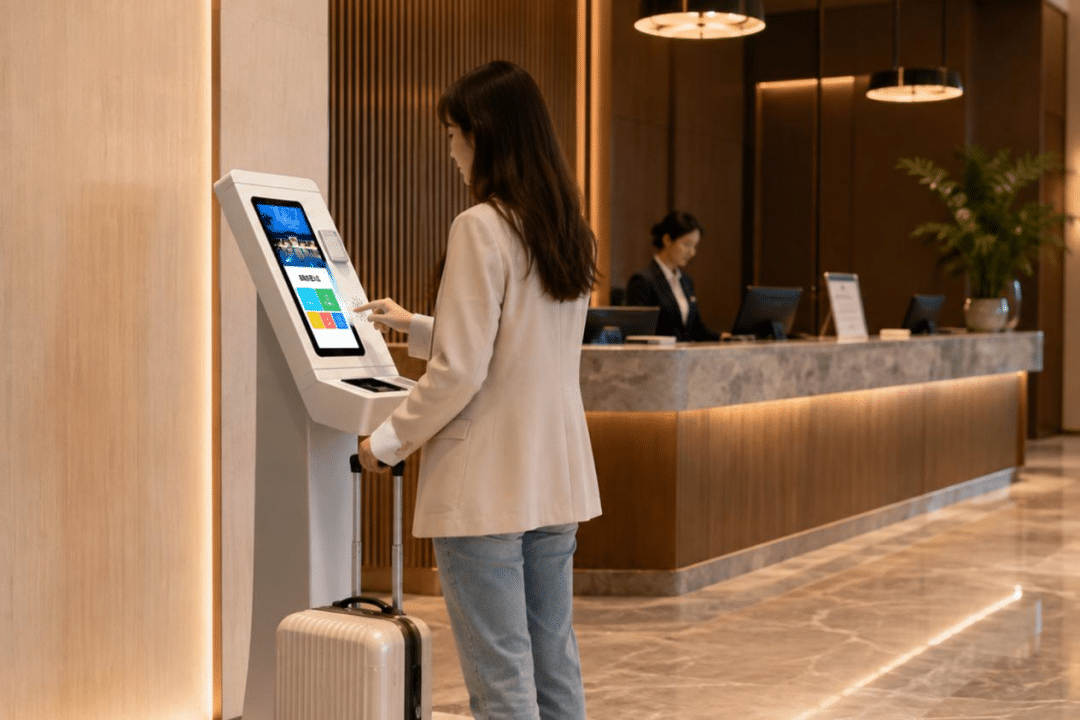
The IoT-3399E can be considered for embedded systems such as:
Final suitability depends on the required interfaces, operating system, peripheral compatibility, and performance requirements of each application.
| Specification | Details |
|---|---|
| Processor | Rockchip RK3399, 64-bit six-core |
| CPU architecture | 2 × Cortex-A72 + 4 × Cortex-A53 |
| Maximum CPU frequency | Up to 1.8 GHz |
| GPU | Mali-T864 |
| Display interfaces | HDMI 2.0a, LVDS, eDP |
| HDMI output | Up to 4K at 60 Hz |
| USB | 2 × USB 3.0, 5 × USB 2.0 |
| Serial interfaces | 3 × RS232, 1 × RS485, 1 × TTL |
| Other interfaces | I²C, GPIO |
| Ethernet | 10/100/1000 Mbps |
| Wireless connectivity | Built-in Wi-Fi |
| Optional connectivity | PCIe 4G module |
| Operating systems | Android 7.1 / 11.0; Linux / OpenHarmony support subject to configuration |
Please confirm the final hardware revision, interface availability, operating system image, and peripheral compatibility with ShiMeta before project deployment.
Choosing the right embedded board is an important step in developing a reliable self-service passport recognition terminal. The ShiMeta IoT-3399E combines RK3399 processing, flexible display outputs, extensive peripheral interfaces, and multiple software options for customized embedded applications.
If you are developing a passport scanning kiosk, identity verification terminal, hotel check-in system, or other self-service device, contact ShiMeta to discuss your interface requirements, operating system, peripheral integration, and project customization needs.


