


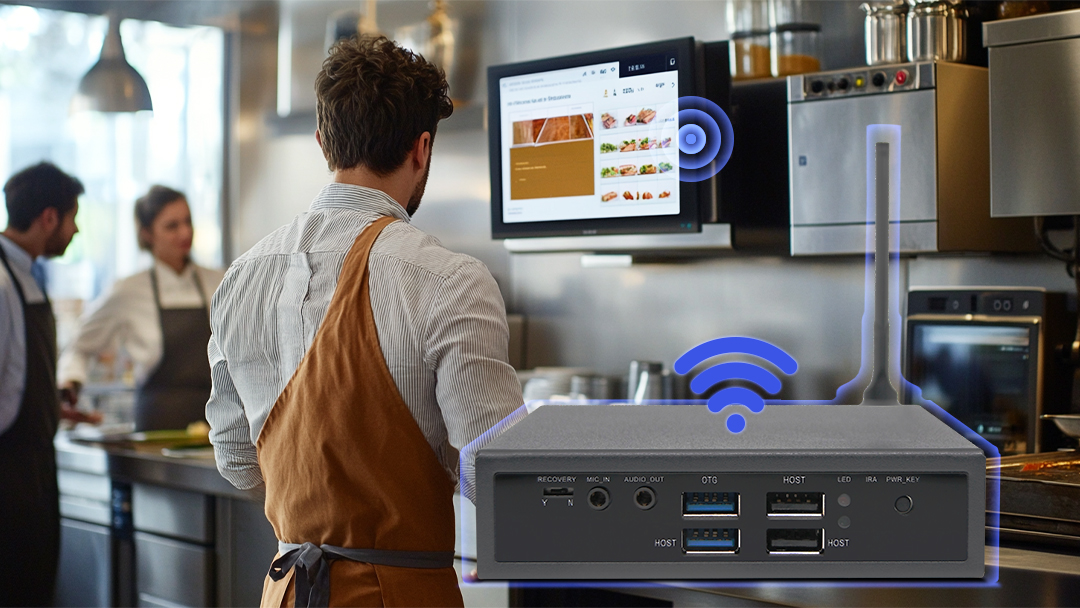
In today’s fast-paced dining environment, efficiency and accuracy are critical. Traditional paper-based workflows often cause issues such as lost tickets, printer noise, and delayed communication between servers and kitchen staff. KDS systems are no longer a luxury but a necessity for modern restaurants aiming to balance efficiency with a superior dining experience.
A Kitchen Display System (KDS) is a digital solution that replaces traditional paper tickets and kitchen printers with real-time on-screen order management. Instead of relying on paper receipts that can get lost or damaged, orders are instantly displayed on a digital screen, making it easier for the front and back of kitchen teams to stay in sync.
To meet these demands, ShiMeta introduces its MBOX-3399M–based KDS system. Powered by the RK3399 six-core processor (up to 1.8 GHz) and Android 7.1, it delivers reliable computing performance. The Mali-T860 GPU supports smooth graphics and dual-screen output up to 4K×2K @60 Hz. With multiple I/O ports, Gigabit Ethernet, Wi-Fi, Bluetooth 4.2, and optional 4G expansion, the MBOX-3399M media player enables smart restaurants to streamline workflows, boost efficiency, and provide a superior dining experience.
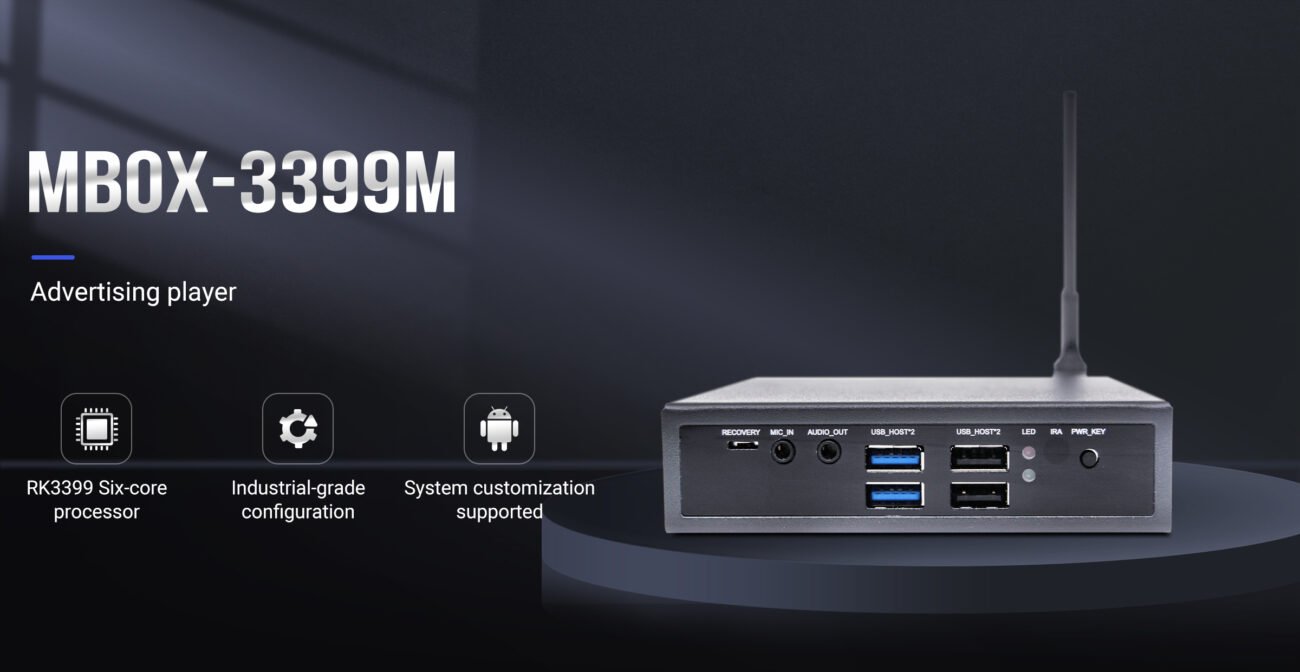
The MBOX-3399M media player serves as the core of ShiMeta’s KDS solution, delivering stable performance for demanding kitchen environments. Powered by the RK3399 six-core processor (up to 1.8 GHz) with Android 7.1 and a Mali-T860 GPU, it ensures smooth multitasking and reliable graphics.
For clear order visibility, the device supports HDMI and VGA dual-screen output with resolutions up to 4K×2K @60 Hz. It also offers rich I/O expandability, including USB 3.0, USB 2.0, and RS-232, enabling flexible peripheral integration. With Gigabit Ethernet, built-in Wi-Fi, Bluetooth 4.2, and optional 4G expansion, the MBOX-3399M guarantees fast and stable communication—making it an ideal hardware foundation for modern smart restaurant KDS systems.
In the smart restaurant project, ShiMeta’s MBOX-3399M was deployed as the backbone of the KDS system, replacing noisy paper printers with clear digital displays. Orders from the POS are transmitted in real time to kitchen screens, showing dish names, quantities, and special requests. Chefs can immediately view and prioritize tasks, while touch-enabled displays allow staff to update order status or confirm dish completion with a single tap.
The dual-screen setup ensures both cooking and serving stations stay synchronized, reducing miscommunication. By integrating stable network connectivity and versatile I/O support, the solution adapts seamlessly to different kitchen layouts. This digital upgrade not only streamlined workflows but also created a calmer, more efficient environment where staff could focus on quality and speed.
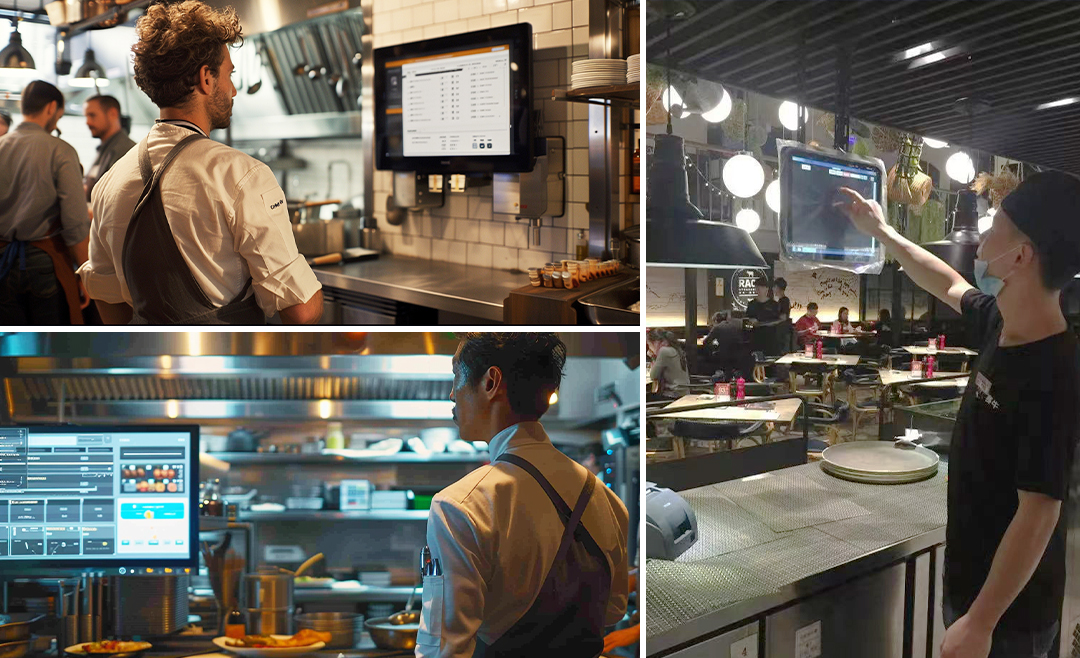
The restaurant experienced observable, quantifiable benefits from the implementation of ShiMeta MBOX-3399M-based KDS system. Orders are now correctly and promptly displayed, which reduces human mistake and removes confusion. Chefs were able to prioritize dishes based on real-time data and complete duties more quickly thanks to the digital workflow. Paper tickets and loud printers were eliminated, making the kitchen more orderly and peaceful, which improved the working conditions for employees. Wait times were reduced and customer satisfaction increased as a result of the cooking and serving stations staying completely synced thanks to dual-screen visibility and reliable connectivity. All things considered, the solution improved the restaurant’s capacity to deliver dependable, superior service in addition to streamlining back-of-house procedures.
ShiMeta’s MBOX-3399M–based KDS system stands out for its balance of performance, reliability, and flexibility. Unlike cloud-only or software-driven solutions, it integrates a powerful media player hardware platform with robust computing, dual 4K display support, and versatile I/O interfaces, making it suitable for complex restaurant environments. Compared with other KDS providers—such as subscription-based Square, browser-dependent Epson, or rugged but costly Oracle hardware—ShiMeta offers a solution that is both cost-effective and highly adaptable. Its built-in connectivity options, including Wi-Fi, Bluetooth, and optional 4G, ensure stable communication even in high-demand settings. By combining enterprise-grade hardware with restaurant-specific usability, ShiMeta delivers a system that not only streamlines kitchen workflows but also provides long-term scalability for smart dining operations.
The adoption of ShiMeta’s MBOX-3399M–based KDS system transformed a traditional kitchen into a modern, digital workspace. By replacing paper tickets with real-time displays, the restaurant achieved faster service, fewer errors, and a quieter, more efficient environment. The solution not only streamlined back-of-house workflows but also enhanced customer satisfaction through quicker, more reliable dining experiences. With strong performance, flexible connectivity, and future-ready scalability, ShiMeta provides restaurants with a solid foundation for smart operations.
Ready to upgrade your kitchen? Contact ShiMeta to explore how our KDS solutions can optimize your restaurant’s workflow and elevate your customer experience.


