


As artificial intelligence moves rapidly from cloud platforms to physical devices, digital signage is entering a new stage of intelligent interaction.
Traditional commercial displays are primarily designed to deliver predefined content. They play advertisements, promotional videos, menus, announcements, or information—but the interaction is largely one-way.
Now, the combination of large language models (LLMs), AI agents, computer vision, speech recognition, and multimodal interaction is changing what commercial displays can do.
Instead of simply displaying information, an AI-enabled terminal can understand users, respond to questions, analyze its surroundings, and provide personalized services.
ShiMeta is exploring this next generation of commercial display technology through a range of AI smart terminal solutions, including AI agent advertising displays, dual-screen AI translation devices, and multimodal voice-and-vision interaction modules.
Traditional digital signage mainly performs three functions:
While these capabilities remain important, AI introduces a completely different interaction model.
An AI-powered digital signage terminal can combine:
AI Models + Computer Vision + Voice Interaction + Touch Interaction + Display Hardware
This enables commercial displays to understand users and environments rather than simply showing predetermined content.
For example, an AI terminal can potentially:
This transformation is particularly valuable in retail, hospitality, tourism, government services, exhibitions, transportation, and enterprise environments.
ShiMeta’s broader product portfolio already combines digital signage hardware, AI computing boxes, smart terminal motherboards, and related software solutions, creating a hardware foundation for these intelligent applications.
One of the most important developments in AI smart terminals is the integration of large language models.
Instead of relying only on fixed menus or predefined interaction scripts, AI models allow commercial terminals to understand natural language and generate contextual responses.
This opens the door to new applications such as:
For businesses, this means that a digital display can become more than a communication tool—it can become an interactive service terminal.
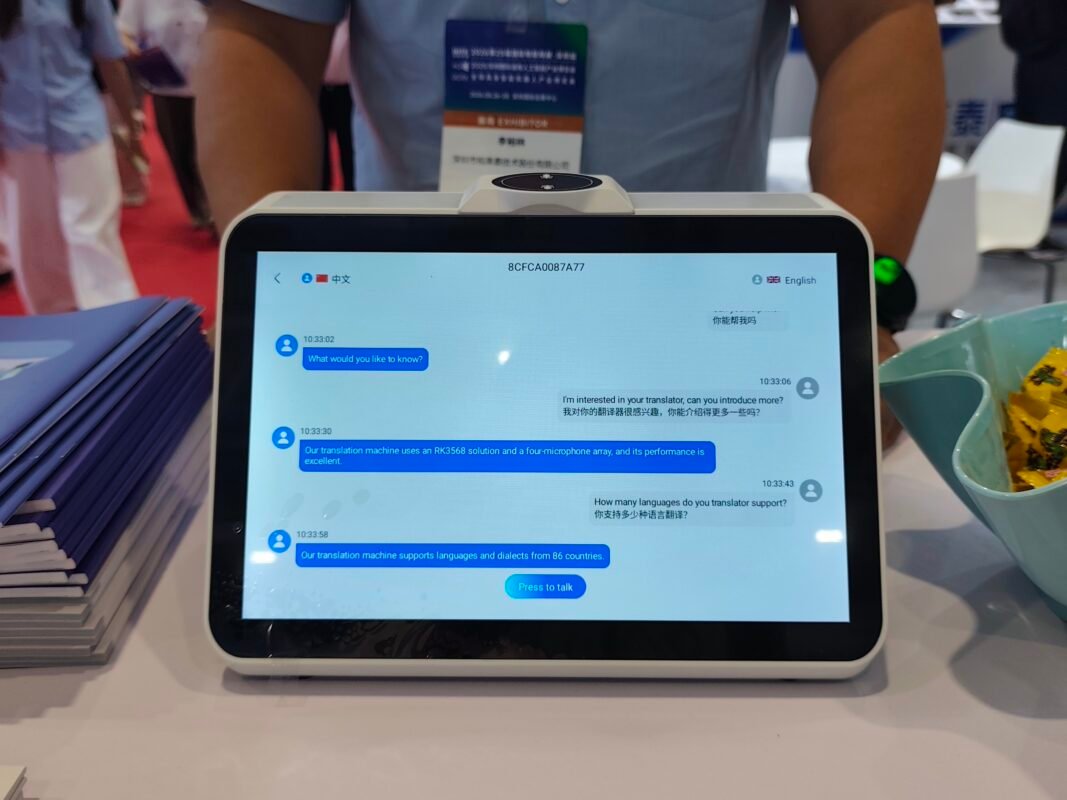
Cross-border communication remains a major challenge for businesses operating internationally.
ShiMeta’s Dual-Screen AI Translator is designed specifically for face-to-face multilingual communication. Its two-sided 10.1-inch display allows both participants to view translated content simultaneously, creating a more natural communication experience.
The device is designed for scenarios such as:
The latest product direction also integrates advanced AI translation capabilities, helping businesses handle multilingual communication more efficiently.
Instead of passing a translation device back and forth, both participants can simply speak and view the translated result on their respective screens.
This is a practical example of how AI + commercial hardware + multimodal interaction can create a new type of intelligent terminal.
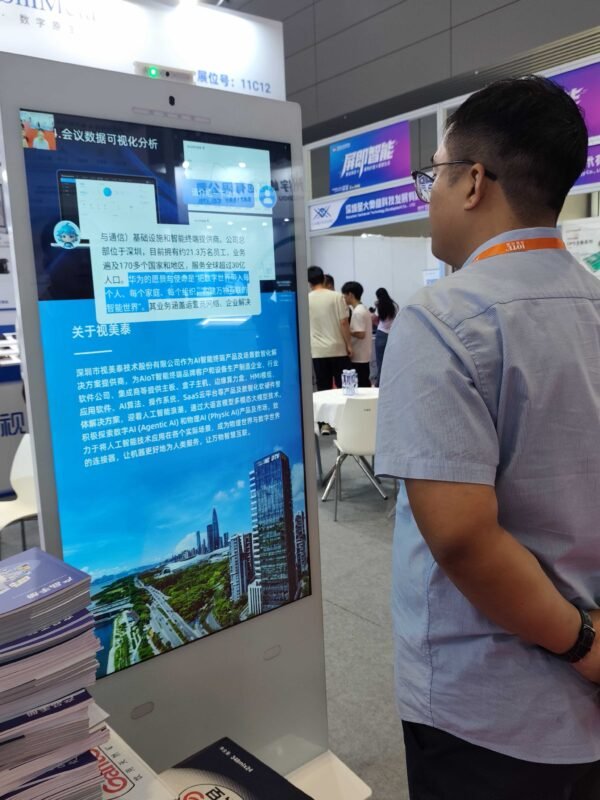
Traditional advertising players mainly focus on content playback. An AI-powered advertising terminal can introduce a new layer of intelligence.
By combining AI vision, large language models, voice interaction, and digital signage software, the display can support functions such as:
AI vision technology can analyze customer flow and provide useful insights for retailers and commercial spaces.
Based on user interaction and business rules, the terminal can provide more relevant promotional or informational content.
Users can interact with the display through natural language instead of relying exclusively on touch menus.
Businesses can combine AI-enabled terminals with centralized digital signage management to monitor and manage deployed devices.
ShiMeta already provides digital signage solutions combining hardware, software, remote content management, and customer-flow analytics, providing a foundation for further AI integration.
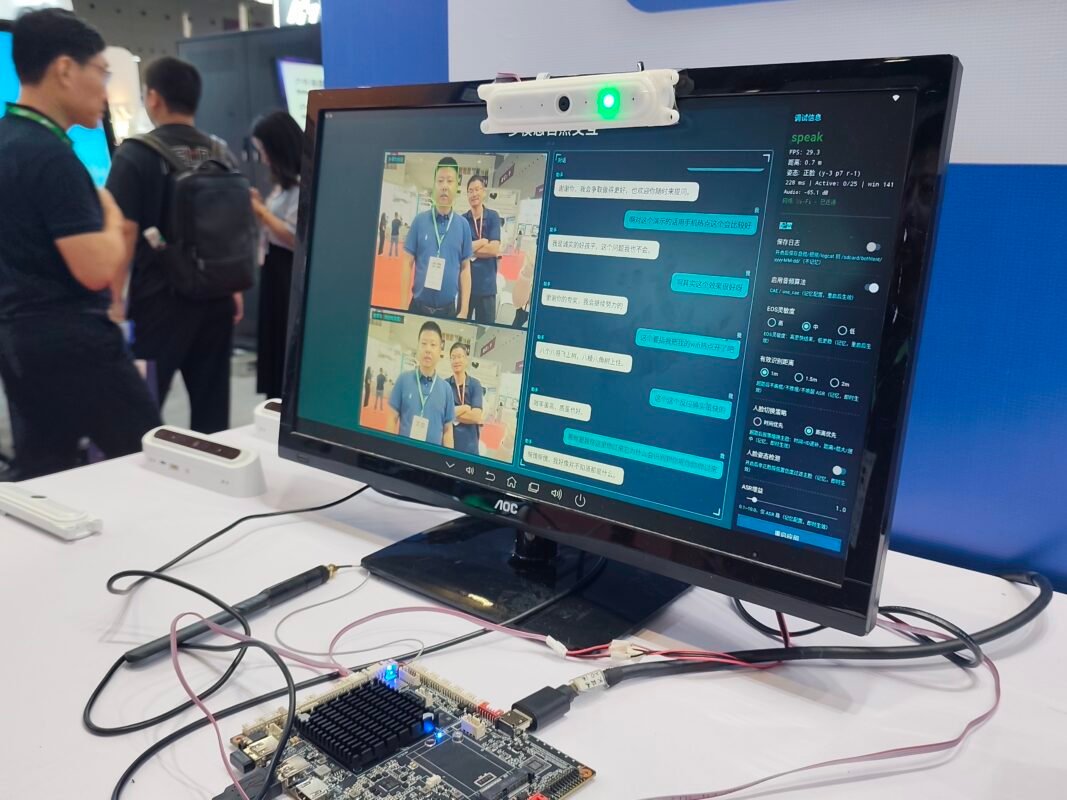
Not every business wants to replace an existing commercial display.
For many system integrators and terminal manufacturers, a more practical approach is to upgrade existing hardware with AI capabilities.
This is where multimodal AI modules can play an important role.
A compact AI interaction module can integrate capabilities such as:
This allows existing commercial display products to evolve into AI-enabled terminals without completely redesigning the hardware.
For OEM/ODM manufacturers and system integrators, modular AI hardware can reduce development complexity and accelerate the transition from conventional digital signage to intelligent terminals.
The biggest change brought by AI agents is not simply better AI performance.
It is the ability to move from responding to commands to completing tasks.
A traditional digital signage system might display:
“Welcome to our store.”
An AI-powered terminal could potentially:
Understand a customer’s question → analyze the request → provide an answer → recommend a product → connect to a business system.
This creates a new interaction model:
Sense → Understand → Decide → Respond → Execute
For commercial applications, this means digital signage can become part of the actual business workflow rather than remaining an independent display device.
AI-powered commercial terminals can be deployed across multiple industries.
AI terminals can support:
Hotels can use AI terminals for:
AI smart terminals can support:
AI terminals can provide:
AI-enabled displays can support:
The development of AI smart terminals requires more than simply adding an AI chip.
A complete solution typically involves:
AI Computing Hardware
↓
AI Models & Algorithms
↓
Multimodal Interaction
↓
Terminal Hardware
↓
Business Software
↓
Scenario-Based Deployment
ShiMeta’s product portfolio covers multiple layers of this ecosystem, including AI smart terminal motherboards, digital signage players, AI computing boxes, kiosks, and software solutions.
The company’s AIBOX product family further extends this architecture toward local AI and AI-agent applications. For example, the AIBOX-M88 combines RK3588 and RK1828 processing, up to 26 TOPS INT8 AI computing power, multimodal connectivity, and an AgentOS environment for local AI-agent deployment.
The evolution of commercial display technology can be summarized in three stages:
1. Traditional Digital Signage
Display → Content
2. Interactive Digital Signage
Display → User Interaction
3. AI Smart Terminal
Display → Understand → Decide → Interact → Execute
This evolution is creating new opportunities for retailers, hotels, government organizations, system integrators, and commercial display manufacturers.
The future digital signage terminal will not simply ask:
“What should I display?”
It will increasingly ask:
“What does the user need, and how can I help?”
The integration of AI agents, large language models, computer vision, voice recognition, and multimodal interaction is transforming commercial displays into intelligent service terminals.
From AI translation and intelligent advertising to multimodal interaction and local AI computing, these technologies are opening new possibilities for digital signage and smart terminal applications.
ShiMeta is continuing to develop AI-powered hardware and scenario-based solutions that help businesses move from traditional displays toward interactive, intelligent, and AI-driven terminals.


