


In today’s fast-paced food industry, quick service restaurants (QSRs) face growing pressure to serve more customers, faster, and with greater accuracy. To stay competitive, many QSR operators are turning to self-ordering kiosks — a powerful technology that is transforming the way customers interact with restaurants.
From touchscreen ordering kiosks to AI-powered kiosk systems, the adoption of self-service ordering technology is no longer a trend — it’s a necessity. Below, we explore the top 5 benefits of using self-ordering kiosks in QSRs, and why it’s a smart investment for your business.
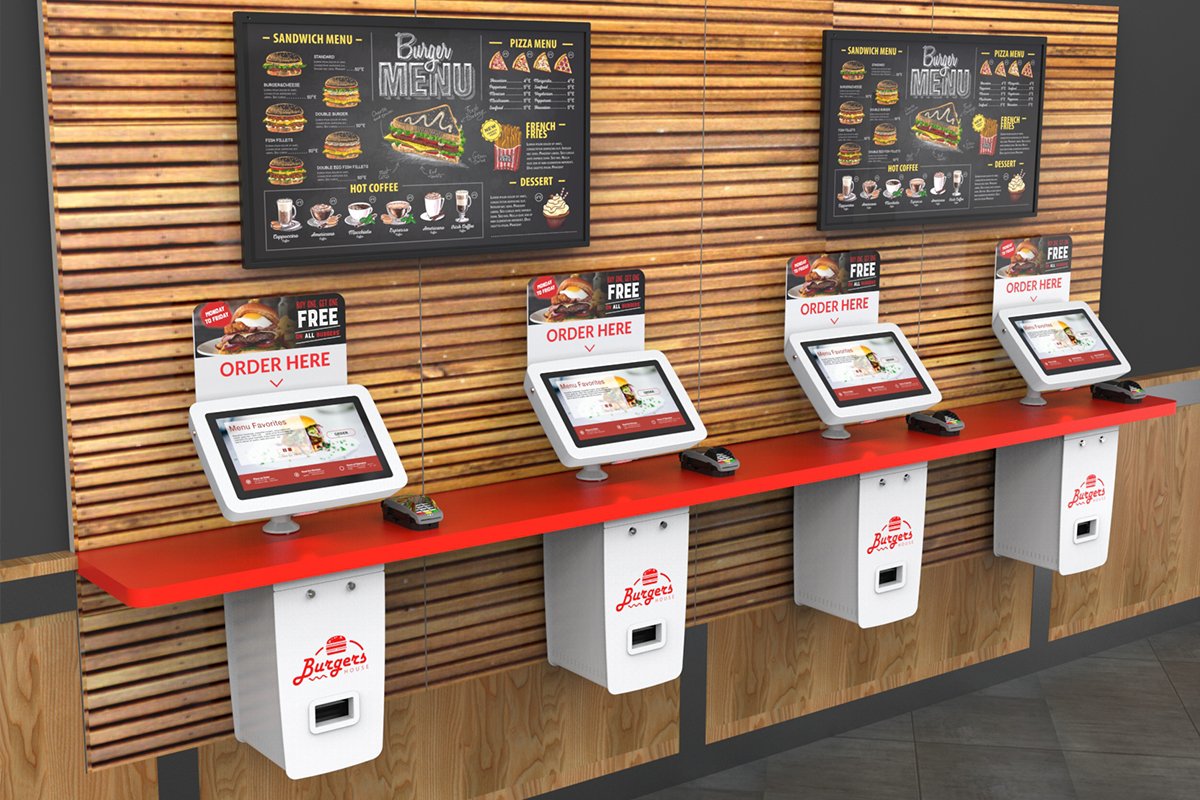
One of the biggest advantages of implementing a self-service kiosk for restaurants is the significant reduction in customer wait times. Unlike traditional ordering systems, where customers must wait in line to speak with a cashier, digital kiosk ordering systems allow multiple users to place orders simultaneously.
During peak hours, this fast food ordering kiosk solution can handle high volumes efficiently, ensuring faster turnaround and improved customer satisfaction.
Human errors in order-taking can cost restaurants both revenue and reputation. With touchscreen ordering kiosks, customers input their selections directly, eliminating miscommunication and reducing the chances of wrong orders.
Kiosks also allow users to review and confirm their orders before payment, which further enhances order accuracy and improves the overall dining experience.
Self-ordering kiosks are not just tools for automation — they’re smart sales assistants. Modern kiosks can automatically suggest add-ons, meal upgrades, or popular combos, leading to an increased average order value.
Whether it’s suggesting a dessert with a meal or offering a larger drink size, these AI ordering kiosks use built-in algorithms to upsell more effectively than human staff.
Did you know? Restaurants using kiosk systems report a 15–30% increase in ticket size.
Labor shortages and rising wages are common challenges faced by the restaurant industry. Installing QSR self-service kiosks in fast food restaurants helps improve workforce distribution, allowing restaurants to move employees from direct customer contact to food preparation or customer support.
Over time, self-service kiosks deliver a high return on investment by reducing dependence on large service teams, especially during peak times.
Self-ordering kiosks improve the customer experience by providing a user-friendly interface, multi-language support, cashless payments, and even loyalty programs.
In addition, each transaction generates valuable customer data that can be used to track preferences, identify peak times, and design targeted promotional campaigns—a major advantage for operators of modern fast food chains.
The integration of self-order kiosks is rapidly changing the landscape of quick service restaurants. From faster service to improved accuracy, higher sales, and data-driven growth, kiosks empower restaurants to meet today’s demands and prepare for tomorrow’s expectations.
Whether you run a fast food chain, a food court brand, or a local QSR, investing in self-service ordering kiosks can be the key to long-term success.
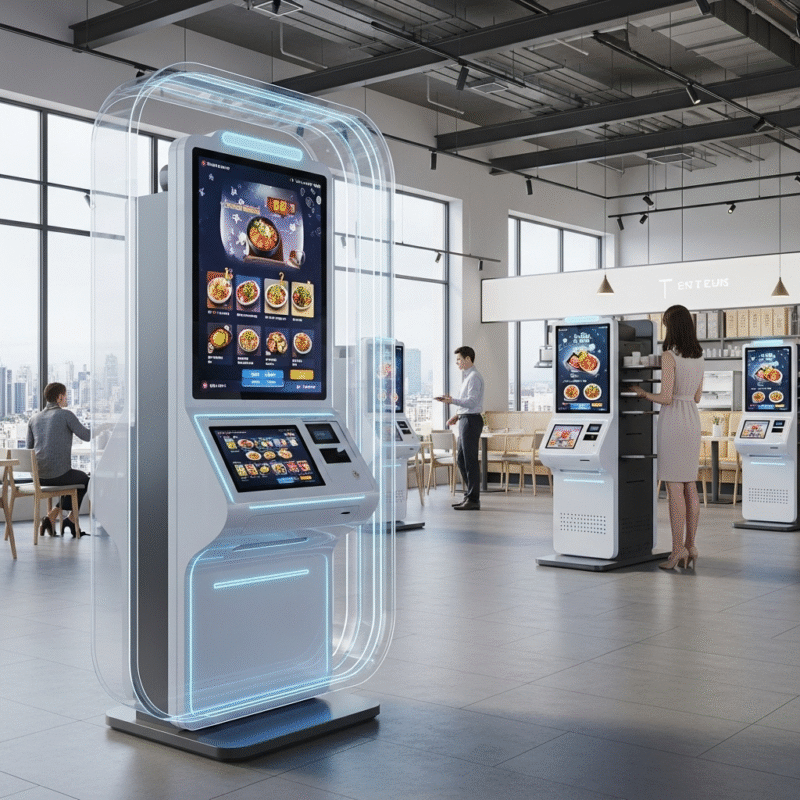
Explore our customizable Android-based kiosk solutions, designed specifically for the QSR and fast casual food industry.
Contact us today for a free consultation.


