


In the ever-evolving landscape of smart cities, retail intelligence, and industrial automation, AIoT (Artificial Intelligence + Internet of Things) is redefining how data is gathered, processed, and acted upon. One of the most visible and dynamic frontiers of this revolution is digital signage—and at the core of it lies the digital signage player.
Traditionally, digital signage players were tasked with little more than playing back scheduled content on screens. Today, they’ve evolved into intelligent edge devices capable of real-time decision-making, sensor integration, and even autonomous operation. As AIoT systems continue to mature, digital signage players are transforming into smart gateways that not only display content but also interact with their environment and audience.
AIoT refers to the fusion of Artificial Intelligence (AI) and Internet of Things (IoT) technologies. This convergence allows devices to:
In the context of digital signage, this means signage players can now:
Let’s look at how traditional media players compare to their AIoT-enabled successors:
| Feature | Traditional Player | AIoT Signage Player |
| Content Playback | Pre-scheduled media only | Dynamic, AI-driven content decisions |
| Connectivity | Basic Wi-Fi/Ethernet | IoT protocols, 4G/5G, sensor networks |
| Analytics Support | Minimal | Real-time audience & behavior analytics |
| External Device Integration | Limited (HDMI only) | Sensors, cameras, actuators, RFID, etc. |
| Processing Power | CPU/GPU playback | NPU/Edge AI model inference |
| Use Cases | Static advertising | Smart retail, crowd analysis, queue mgmt. |
This shift marks the rise of edge AI computing—processing data where it’s generated, minimizing latency and bandwidth consumption.
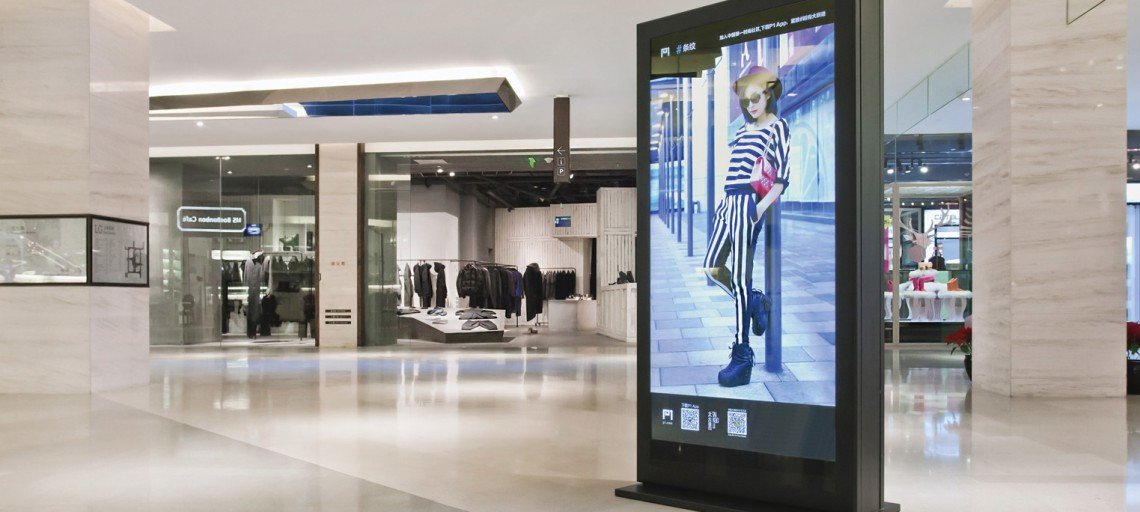
🛍 Smart Retail
In modern stores, signage is no longer just about promotions. AIoT signage players deliver:
📊 According to Deloitte, retailers that leverage real-time customer data through digital signage see up to a 30% increase in sales conversion.
🚏 Smart Cities and Public Spaces
AIoT signage enhances civic infrastructure through:
🏭 Industrial Environments
Factories use digital signage for:
🚉 Transportation Hubs
At airports and transit stations:
🏥 Healthcare & Public Buildings
🎯 1. Real-Time Personalization
AI models enable content to adapt based on:
Example: Displaying sunscreen ads on hot afternoons or coffee ads on cold mornings.
📉 2. Lower Latency and Bandwidth Use
By processing data locally:
📈 3. ROI Through Data Insights
Smart signage can track:
This empowers businesses and city planners with actionable insights to optimize strategies.
🛠 4. Automated Maintenance and Energy Efficiency
AIoT players can:
💡 Edge AI Chips & NPUs
Modern ARM SoCs like RK3588, NVIDIA Jetson, or Qualcomm QCS610 integrate NPUs (Neural Processing Units) that:
🧠 Edge AI Frameworks
Popular frameworks for deploying models on signage players:
These allow signage vendors to deploy trained models directly to ARM or x86 devices.
🔗 IoT Protocol Support
AIoT signage players support:
🌐 Cloud & Edge Hybrid Architectures
A smart signage system often uses:
This hybrid model offers flexibility, scalability, and resilience.
ShiMeta Devices offers a full line of industrial-grade media players purpose-built for AIoT applications.
🔹 ShiMeta RK3588 Android Signage Player
Explore Product →
🔹 ShiMeta RK3399Pro Linux Signage Box
Explore Product →
🔹 ShiMeta x86 AI Edge Mini PC
Explore Product →
| Model | OS | AI Capability | Display Output | Use Cases |
| RK3588 Android Player | Android 12 | ✔ NPU (6 TOPS) | Dual HDMI 4K | Smart retail, interactive kiosks |
| RK3399Pro Linux Box | Ubuntu/Linux | ✔ NPU (3 TOPS) | HDMI + eDP | Industrial AI, public health |
| x86 Edge Mini PC | Windows/Linux | External GPU | HDMI/DP | Control rooms, data-heavy AI apps |
Looking ahead, we can expect AIoT signage players to get even smarter, smaller, and more efficient. Trends to watch:
⚡ 1. Full Edge Autonomy
Content logic and AI decisions handled 100% at the edge with no cloud dependency.
📶 2. 5G and V2X Integration
Ultra-low latency updates for transport signage, vehicle tracking, and smart intersections.
🔐 3. Privacy and Data Governance
As signage systems collect more data, ensuring GDPR and local privacy compliance is critical.
🤖 4. Self-Healing Networks
Signage networks that automatically reroute or restore services during failures.
The AIoT era is pushing digital signage far beyond passive screens into intelligent communication platforms. As smart cities expand and industries digitize, AI-powered signage players are becoming central to real-time, data-driven engagement.
If your business or municipality is planning to invest in future-ready signage solutions, selecting the right AIoT-compatible hardware is mission-critical.


